Home › Asphalt Pathways, Sidewalks, and Trails
We install asphalt pathway paving in Irving, TX for parks, schools, and commercial campuses. Our smooth, continuous paths are ideal for walkers, joggers, bikes, and strollers. Thoughtful routing and drainage help reduce puddles and edge erosion. Reach out today to plan new asphalt sidewalks or multi use trails for your property or community project.
Precision Asphalt Irving provides professional asphalt pathway paving throughout Irving, TX, Texas and the surrounding area. Our licensed, insured crew delivers safe, clean, on-time work with a free estimate before anything begins. Call (469) 242-1785 or request your free quote.
Durable Asphalt Pathways, Sidewalks, and Trails in Irving
If you are planning a new walking route around your Irving property, Precision Asphalt Irving builds asphalt pathways, sidewalks, and trails that are comfortable to walk on, easy to maintain, and built for Texas heat. We work on neighborhood sidewalks, HOA walking loops, connections between parking lots and buildings, church and school walkways, and park or greenbelt trails.
Around Irving you will see a mix of older 1970s subdivisions, newer master-planned communities, and commercial parks along 183 and 114. Each setting needs a slightly different approach. Older areas often need us to remove cracked concrete and tree-damaged slabs, then replace them with a continuous asphalt path that flexes better with soil movement. Newer communities usually focus on matching existing path widths and colors and keeping everything ADA compliant for accessibility.
Asphalt pathway paving is usually faster and more cost effective than poured concrete, especially on long runs around ponds, sports fields, or school campuses. It is also easier to repair in smaller sections later. When we visit your property, we look at how people will use the path, where water will go during a downpour, and what equipment we can realistically bring into the space without tearing up lawns or landscaping.
How Our Asphalt Pathway Paving Process Works
Precision Asphalt Irving follows a clear step-by-step process so your new pathway, sidewalk, or trail holds up under daily use.
1. Site walk and layout: We start with a walk-through, marking the exact path alignment with paint or flags. We talk through width requirements, whether you need room for strollers or golf carts, and any tight areas near fences or foundations.
2. Demolition and clearing: For replacement projects we remove old concrete or asphalt using compact saws and breakers that fit into residential yards. For new paths we clear grass, roots, and surface debris. In Irving soils, especially the clay-heavy areas near Belt Line and Rochelle, we are careful to remove soft or pumping spots that could cause future sagging.
3. Grading and drainage setup: We rough grade the subgrade to create a slight cross slope, usually around 1.5 to 2 percent, so water sheds off the surface instead of pooling. Where the path crosses a swale or drainage channel, we may install a small culvert or deepen the ditch on one side to keep water moving.
4. Base installation and compaction: A stable base is key for asphalt pathway paving. We typically install 4 to 6 inches of crushed limestone or flex base, then compact it in layers with plate compactors or small rollers. For golf cart or light vehicle paths we may increase the base thickness in known soft spots.
5. Asphalt placement: For most sidewalks and trails we install 2 to 3 inches of hot mix asphalt. In open areas we use a small paver for a smooth, consistent surface. In tighter backyards or around landscaping beds we may hand-place and then roll the material. We time our deliveries so the mix stays hot enough to compact properly even on cooler days.
6. Final compaction and edges: We roll the surface to achieve a tight, even finish, then dress the edges with topsoil or crushed stone so there is no sudden drop-off. This makes the path safer and also protects the edges from crumbling when someone steps or drives slightly off the pavement.
Design Choices: Width, Thickness, and Surface Options
Good pathway design goes beyond simply putting asphalt on the ground. Precision Asphalt Irving walks you through the key decisions so your walkway feels right and performs well.
Width: For basic residential walkways beside a driveway or around a side yard, 3 to 4 feet is common. For HOA walking loops where two people often walk side by side, 5 feet is usually more comfortable. For golf cart paths, service access, or mixed bike and pedestrian trails, we typically recommend 6 to 8 feet.
Thickness and base: Foot traffic paths can usually perform well with 2 inches of asphalt over 4 inches of compacted base. If maintenance carts, mowers, or utility vehicles will use the path, we may suggest 3 inches of asphalt and 6 inches of base, especially in areas with softer soil or past drainage problems.
Surface texture: A slightly textured finish gives better traction when it rains. On steep grades, such as access paths down to detention ponds or creekside trails, we adjust rolling techniques to avoid overly smooth surfaces that could be slick when wet.
Color and edging: Standard asphalt is dark, which can get hot in the summer, but it provides strong contrast against lawns for visibility at night. Where heat buildup is a concern, such as school play areas, we can discuss sealcoat options or lighter aggregate blends that reduce surface temperature somewhat. Edging can be finished with soil and sod, compacted crushed stone, or concrete curbs, depending on your budget and the look you want.
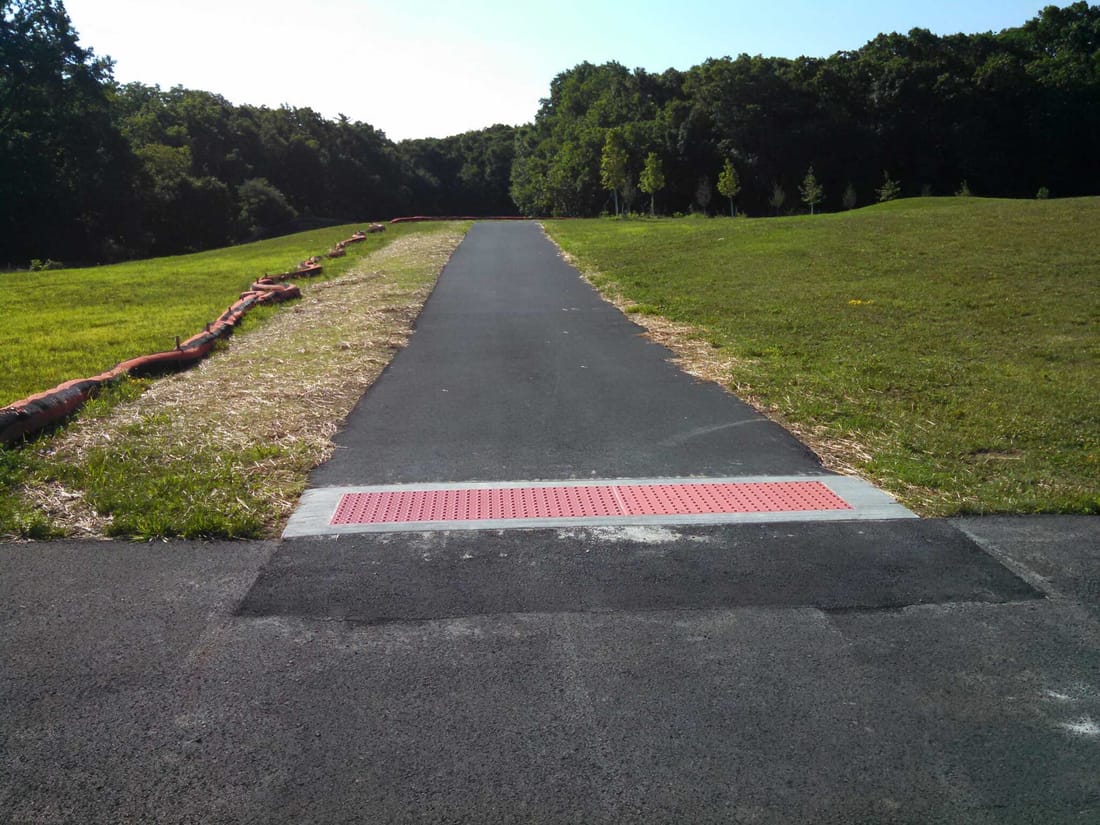
Accessibility: For sidewalks that connect parking areas to building entrances, we design slopes, cross slopes, and transitions to meet ADA guidelines. That includes adding asphalt ramps at curb cuts, smoothing out sharp vertical changes, and planning crosswalk tie-ins where needed.
Costs, Common Issues, and How We Prevent Problems
Asphalt pathway paving costs in Irving vary based on several practical factors. Precision Asphalt Irving explains these upfront so you are not surprised later.
Access and layout: Long, straight runs behind homes in Las Colinas or Valley Ranch are more efficient than short, winding sections with multiple obstacles. If we have to move material through narrow gates, around pools, or across existing patios, labor time increases.
Existing conditions: Removing and hauling off old concrete is more costly than building on a clean grass area. If the existing surface shows signs of chronic drainage problems, such as persistent muddy areas or standing water after storms, we may recommend undercutting and adding more base rock to stabilize the area before paving.
Depth of base and asphalt: Thicker base and asphalt raise costs, but in high use or soft soil areas they pay off by reducing future repairs. We will price at least one option that balances upfront cost with long-term performance and explain the tradeoffs.
Common issues and how we address them:
• Tree roots: Irving has plenty of mature oaks and elms. Where roots have already lifted old walkways, we either reroute the new path slightly, install root barriers, or adjust base depth and reinforcement to span over the problem zone. We are careful not to remove large structural roots that could damage the tree.
• Drainage and ponding: Low spots cause faster pavement breakdown. During grading we use string lines or laser levels to check for unintended dips. If the surrounding area is flat, we may create shallow swales beside the path to give water somewhere to go.
• Edge raveling: Pathway edges are more vulnerable than wide parking lots. We strengthen edges by ensuring good compaction, recommending soil or stone shoulders beside the path, and avoiding extremely thin tapers that tend to crumble.
We prefer to handle small problems during construction instead of after the first big rain, so our crews take the time to test slopes and check for soft areas before the asphalt goes down.
What Irving Property Owners Should Do Before and After Paving
A smooth project is a team effort. Here is what you can do before and after asphalt pathway paving to get the best result from Precision Asphalt Irving.
Before we arrive:
• Clarify the route: Walk the proposed path and mark any must-avoid areas such as sprinkler heads, shallow utility lines, or favorite trees. We can adjust the alignment on site as long as the overall layout makes sense.
• Arrange access: If work is in a backyard or interior courtyard, confirm gate widths and any HOA rules about equipment. Let neighbors know if we will need to stage materials on shared driveways or common areas.
• Talk through future use: Let us know if you may drive golf carts, maintenance vehicles, or trailers on the path. Designing for this up front is cheaper than trying to reinforce a thin path later.
After paving:
• Initial cure period: Avoid foot traffic for at least 24 hours and heavier loads for several days, especially in cooler or very humid weather. Asphalt continues to firm up over the first few weeks.
• Sprinklers and water: Turn off nearby sprinklers for the first day so water does not cool the surface unevenly or wash fine material from the edges.
• Maintenance routine: For most residential and light commercial pathways, basic sweeping and occasional rinsing is enough. In high use areas, especially where carts or small vehicles travel, we may suggest a sealcoat after the first year or two to protect against oxidation and refine the surface.
When you are ready to look at options for asphalt pathways, sidewalks, or trails on your Irving property, Precision Asphalt Irving can meet you on site, review layouts, and provide a detailed written estimate that explains thicknesses, materials, and any recommended upgrades so you can make an informed decision.