Home › Road, Street, and Municipal Paving
We handle road paving in Irving, TX for subdivisions, private communities, and municipal projects. Our crews are equipped to install and resurface streets with minimal disruption. Careful grading, compaction, and quality asphalt mixes deliver smooth, long lasting roads. Contact us to discuss specifications and scheduling for your street or municipal paving work.
Precision Asphalt Irving provides professional road paving throughout Irving, TX, Texas and the surrounding area. Our licensed, insured crew delivers safe, clean, on-time work with a free estimate before anything begins. Call (469) 242-1785 or request your free quote.
Road Paving in Irving Built for Heavy Texas Traffic
When a city street or neighborhood road in Irving starts raveling, cracking, or holding water after every storm, it is usually a sign that the base or asphalt mix is no longer doing its job. At Precision Asphalt Irving, our road paving work is built around the specific traffic and soil conditions we see across Irving, from busy commercial corridors to quiet residential cul‑de‑sacs.
In our area, black clay soils expand when wet and shrink during hot, dry spells. That constant movement is a major reason local streets develop alligator cracking and dips. Before we ever bring in an asphalt paver, we evaluate the existing road structure, traffic patterns, and drainage. A light residential lane that carries trash trucks a few times a week needs a different design than a collector road that sees daily 18‑wheelers and buses.
We work closely with municipalities, HOAs, and commercial property owners in Irving to match the pavement section to the use. That might mean thicker base in areas that tend to stay soft after rain, adding lime or cement treatment for stabilization, or adjusting the asphalt mix to handle frequent braking and turning near stop signs and intersections.
Our goal is not just a smooth surface on day one. We want you to get the longest possible life out of your road or street, with fewer repairs, fewer complaints, and less disruption for the people who drive it every day.
How Our Road, Street, and Municipal Paving Process Works
Every road paving project in Irving starts with a site visit. A Precision Asphalt Irving estimator walks the length of the roadway, checks drainage patterns, reviews any existing plans, and documents problem spots like standing water, rutting, and edge failures. We then core or test the existing pavement when needed so we know how thick the current asphalt and base are and whether they can be reused.
Once we understand the condition, we help you decide between full reconstruction and mill and overlay. Mill and overlay means grinding off the top layer of asphalt, usually 1 to 2 inches, correcting minor base issues, then paving a fresh surface course. It is a good fit when the base is still solid. Full reconstruction involves removing the old pavement and base material down to subgrade, reworking and compacting the soil, adding new base rock, then paving new asphalt. This is what we recommend when the road has widespread base failure or chronic drainage problems.
During construction, the first step is traffic control. On municipal streets and busy access roads, we provide or coordinate signage, cones, flaggers, and lane closures so traffic can keep moving safely. Next is demolition and milling. We use cold planers to remove existing asphalt to a precise depth, which helps match tie‑ins at driveways and intersections without creating trip points.
If base repairs are needed, we excavate soft or pumping areas, install new crushed limestone base, then compact it to spec, typically 95 percent density or higher using vibratory rollers. In some Irving locations with unstable clay subgrade, we may recommend lime or cement treatment. This step chemically stabilizes the soil and greatly reduces future movement.
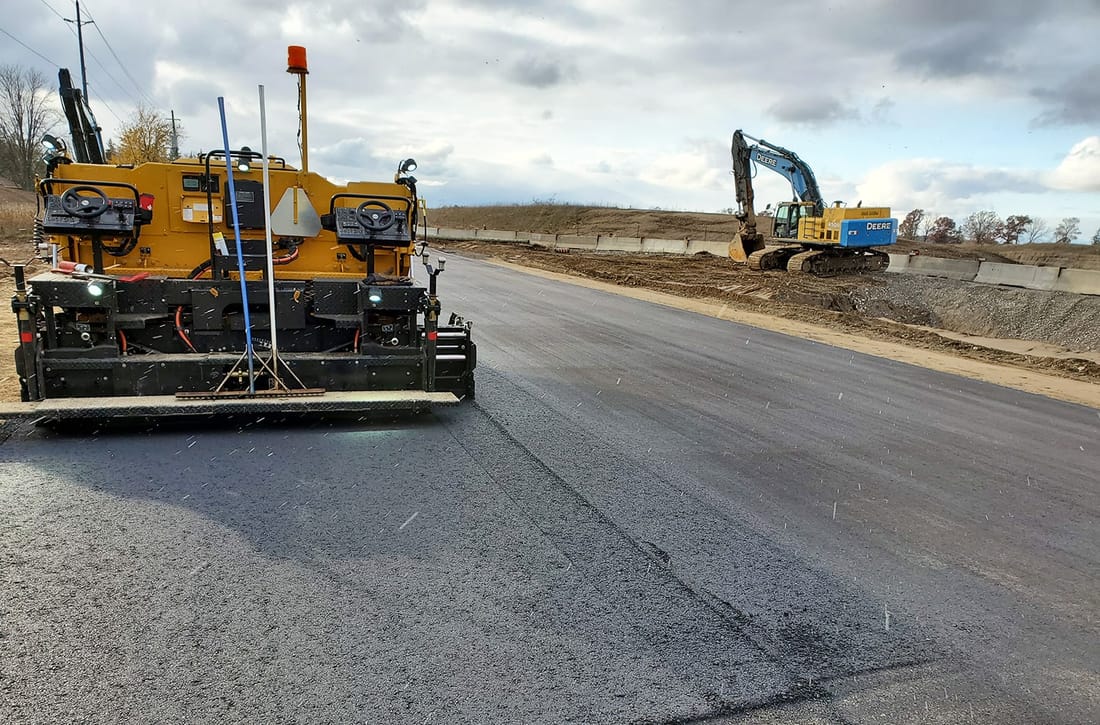
Asphalt paving follows immediately after the base is ready. We use commercial pavers to place the asphalt in one or more lifts, depending on design thickness, then compact using steel drum and pneumatic rollers at the right temperatures. For city streets we often use a dense graded hot mix that balances load carrying capacity with smoothness. For residential streets we may use a slightly finer surface mix that reduces road noise and provides a cleaner appearance.
Design Choices That Affect Cost, Durability, and Ride Quality
Road paving is not one size fits all, and the choices you make at the design stage have a big impact on cost and long term performance. Precision Asphalt Irving walks you through each of these decisions in clear, non technical language so you can defend your budget and avoid surprises.
Pavement thickness is one of the biggest drivers of cost. A typical Irving residential street might use 6 inches of compacted base with 2 to 3 inches of asphalt, while a bus route or industrial access road may need 8 inches of base with 3 to 4 inches of asphalt. We size these layers based on expected traffic loads and your desired service life. Cutting thickness to save a little upfront can easily shorten the life of the road by years.
Drainage is just as important. Water that sits on the surface or beneath it will shorten pavement life in North Texas. We look at crown (the slight center high point of the road), gutter lines, inlets, and existing utilities to be sure water has a path to get off and away from the structure. In some Irving neighborhoods that lack curb and gutter, we may recommend regrading ditches or adding concrete flumes at low points.
Material selection also plays a role. For surface courses we can adjust the aggregate size and asphalt binder content to meet city specs or unique needs. For example, streets near schools and busy retail areas see more stop and go traffic and turning, which can cause shoving if the mix is too soft. In those areas we may spec a slightly stiffer binder or different aggregate blend. In cul‑de‑sacs and low speed residential loops, we can prioritize a smoother texture and appearance.
If your project has budget constraints, we sometimes phase the work. One option is to reconstruct the worst sections first and mill and overlay the rest, then come back in a future budget cycle for full rebuild. Another option is to keep the base design robust but use a slightly thinner initial asphalt lift, planning a future overlay after several years. We explain the pros and cons of each approach so you can present a clear plan to stakeholders or board members.
Common Road Problems in Irving and How We Fix Them
Living and working in Irving, we see the same road issues come up again and again. Understanding what is really causing them helps you choose the right fix rather than throwing money at short term patches.
Alligator cracking, where the asphalt looks like a reptile skin pattern, usually indicates base failure, not just surface aging. In these cases, simply overlaying the street will not last. Precision Asphalt Irving identifies these areas during our assessment and recommends full depth repairs. We sawcut around the failed section, remove the asphalt and base, rebuild the base, then pave and compact new asphalt flush with the surrounding mat.
Longitudinal cracks that run parallel to the centerline of the street often trace back to movement at construction joints or along utility trenches. For moderate cracking where the base is still stable, we can mill a narrow strip and repave, or rout and seal the cracks, then apply an overlay. This approach keeps water from penetrating and stops the crack from reflecting quickly into a new surface layer.
Rutting and depressions, especially in wheel paths and at stop signs, are common in hotter months when traffic loads are high. These can be due to an under designed asphalt mix or insufficient compaction at the time of original construction. Fixing rutting properly means milling below the low points to sound material, correcting any base issues, then installing a new lift and compacting it at the correct temperature. In high stress zones we often tweak the mix design to resist deformation.
Poor drainage is another big culprit in Irving neighborhoods. You may notice puddles that linger for days or ice patches in winter. In those cases we check the road crown, edge elevations, and adjacent soil grades. Solutions range from spot leveling with new asphalt, to grinding and reshaping the surface, to a more involved regrade of base and shoulders. On municipal projects we coordinate with the city to be sure any changes still meet accessibility and drainage requirements.
By matching the repair method to the actual failure mechanism, we help cities and property managers stretch their paving budgets and reduce callbacks.
What to Expect When You Hire Precision Asphalt Irving
Road, street, and municipal paving affects a lot of people, which is why clear communication and planning matter as much as the finished asphalt. When you work with Precision Asphalt Irving, we start with a detailed written scope that outlines pavement sections, traffic control plans, and how we will phase work to keep access open for residents, businesses, and emergency services.
Before paving begins, we coordinate with your city contacts, HOA board, or property management team to set schedules, identify critical access times, and decide how notices will go out. For neighborhood streets in Irving, we often recommend door hangers or email notices at least 48 hours in advance so residents can move vehicles and plan around temporary closures.
During construction, our superintendent is on site to manage crews, inspect subgrade and base preparation, and verify asphalt temperatures and compaction. We check cross slopes and transitions at intersections and driveways to ensure smooth, drivable tie‑ins. If unexpected issues come up, like soft subgrade or unmarked utilities, we pause, explain the options, and get your approval before proceeding.
When paving is complete, we walk the project with you and mark any areas that need touch up, such as minor low spots or cosmetic seams. We provide recommended opening times for traffic based on ambient temperatures and mix type. In most Irving projects, light vehicle traffic can return the same day, while heavy trucks may need to wait a bit longer.
We also talk through maintenance planning. For many roads, a seal coat or thin overlay at the right time can add years of life. We help you prioritize which streets or segments should be monitored closely and when to budget for future preservation so you stay ahead of major failures instead of reacting to them.