Home › Industrial and Heavy-Duty Asphalt Paving
We deliver industrial asphalt paving in Irving, TX designed for heavy trucks, forklifts, and constant loading. Our designs account for high axle loads, turning movements, and drainage. Thick asphalt sections and strong bases help prevent rutting and premature failure. Contact us to plan paving for your truck yard, loading dock, or warehouse access areas.
Precision Asphalt Irving provides professional industrial asphalt paving throughout Irving, TX, Texas and the surrounding area. Our licensed, insured crew delivers safe, clean, on-time work with a free estimate before anything begins. Call (469) 242-1785 or request your free quote.
Industrial Asphalt Paving Built for Real-World Loads in Irving, TX
Industrial and heavy-duty asphalt paving is not the same as a basic parking lot. You are dealing with frequent 18-wheelers, forklifts, loaded yard trucks, and sometimes tracked equipment. Precision Asphalt Irving designs every industrial section based on the actual loads you expect, not a generic standard.
We start by walking your site in Irving and mapping out traffic patterns. We look at where trucks turn, ramp grades, loading dock locations, dumpster pads, fuel islands, and staging areas. Those are the spots that rut, shove, and break apart first if they are not built correctly. Instead of treating the entire site with one pavement section, we often design two or three different sections, with the heaviest asphalt and base in the drive lanes and loading areas.
North Texas heat, sudden downpours, and clay subgrade are all factors. In Irving, asphalt can reach surface temperatures well over 140°F in summer, which softens poorly designed pavements and causes depressions under truck tires. Our mixes, base depths, and drainage details are selected specifically to handle that combination of heat, moisture swings, and heavy loading for the long term, not just to pass inspection on day one.
How We Design Heavy-Duty Pavement Sections That Last
For industrial asphalt paving, the pavement design is where most projects succeed or fail. Precision Asphalt Irving starts with soil evaluation. In much of Irving, you get expansive clay that swells when wet and shrinks when dry. If we see that on site, we specify deeper base, possible lime or cement treatment, and more aggressive drainage so the subgrade stays stable.
Next, we select a pavement structure. A common heavy-duty section for tractor-trailer traffic in Irving might be 8 to 10 inches of compacted crushed limestone base under 3 to 5 inches of hot-mix asphalt, placed in multiple lifts. High-impact areas like dumpster pads or fuel islands may need a thicker asphalt section or a concrete insert tied into the asphalt to prevent rutting and surface breakup.
We also talk through asphalt mix options with you. For example, a stiffer performance-graded binder is often worth the extra upfront cost in high-heat, high-load areas because it resists rutting and shoving. In some cases, we specify a coarse-graded base course mix for strength, topped with a finer surface mix for smoother rolling and easier cleaning.
Step-by-Step: Our Industrial Asphalt Paving Process
Precision Asphalt Irving follows a clear process so heavy-duty projects run in a predictable way and you know what is happening on your site.
1) Site assessment and layout. We meet on site to review your operations schedule, turning radii, entry and exit points, and any future expansion plans. We mark out drainage paths, slopes, and areas that must remain open during work so we can phase the job around your production.
2) Subgrade preparation. We strip organics and soft material, then proof-roll the subgrade with loaded equipment. Any areas that deflect or pump are undercut and rebuilt. When clay conditions call for it, we discuss lime or cement treatment to reduce future movement.
3) Base installation. We place crushed limestone base in lifts, typically 4 inches at a time, and compact to specified density using vibratory rollers. We fine-grade with GPS or laser-guided equipment when appropriate so final slopes shed water to drains, not to your building or dock doors.
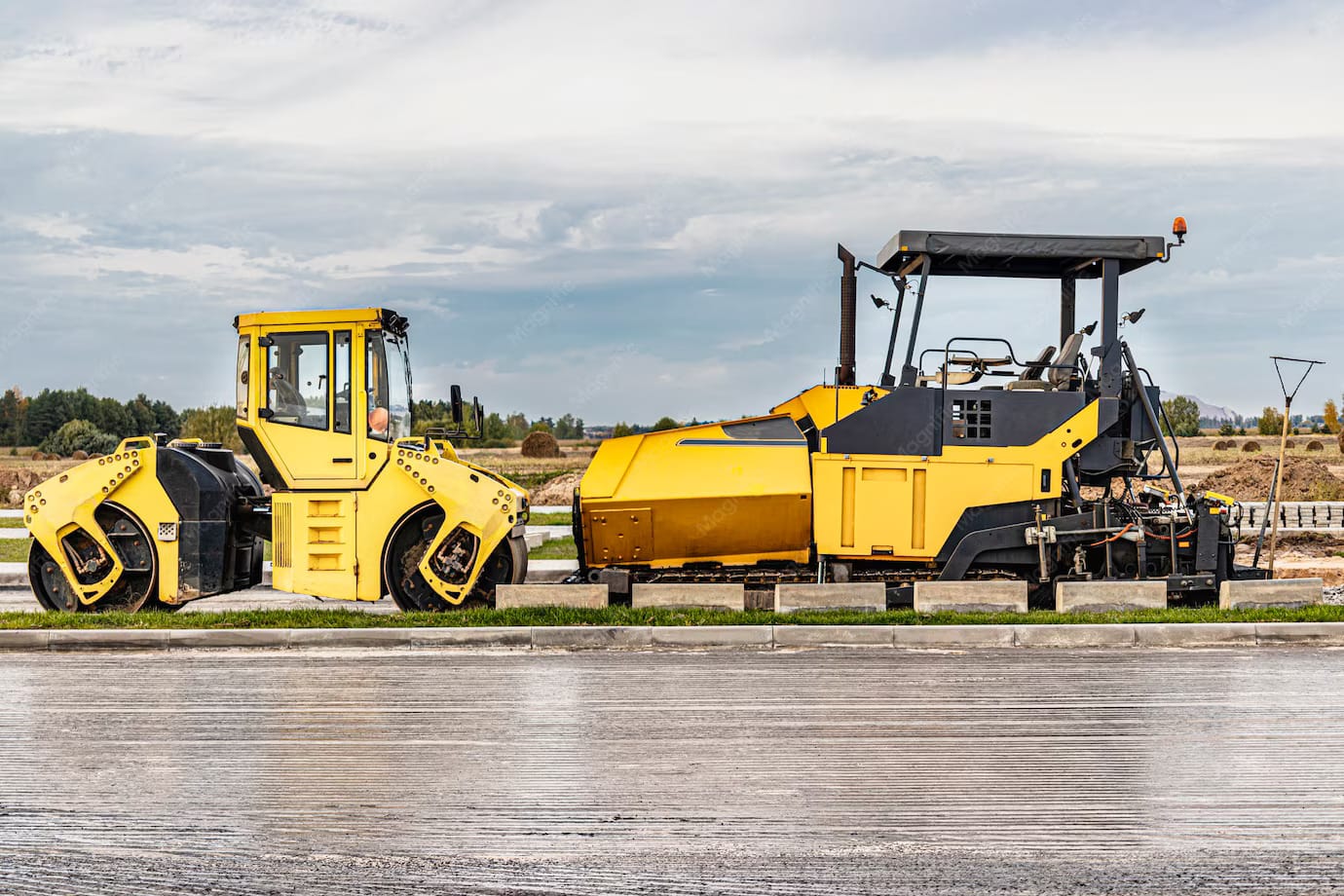
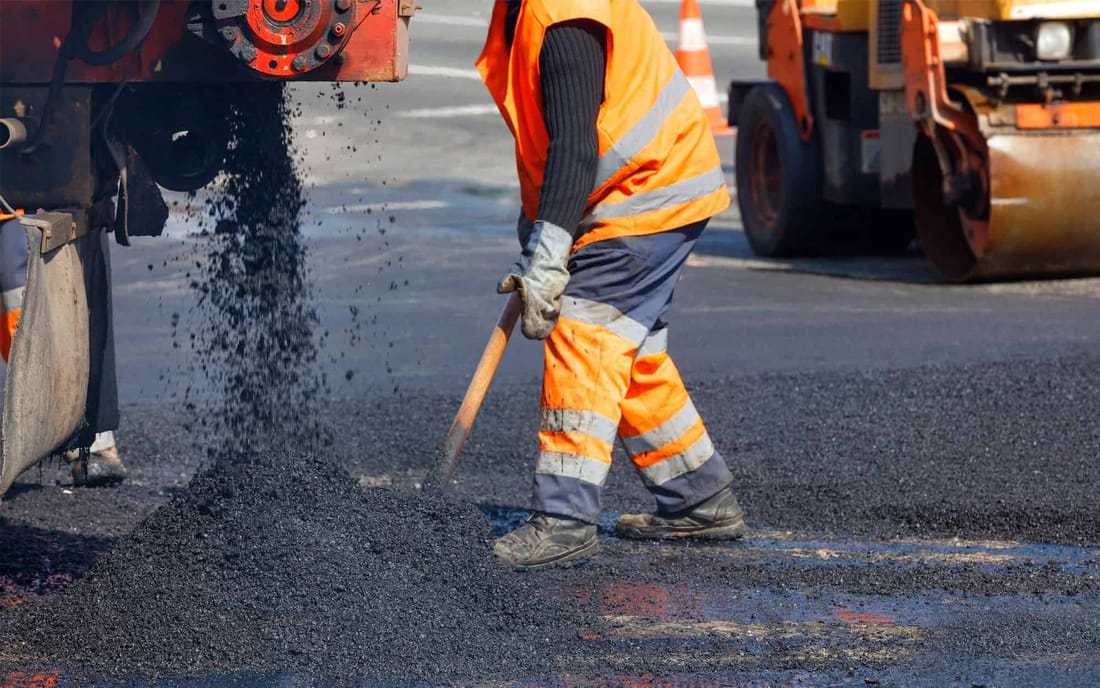
4) Asphalt paving in lifts. We place hot-mix asphalt with a self-propelled paver, not by hand except at tie-ins and tight spots. Heavy-duty areas get multiple lifts. Each lift is compacted with steel and pneumatic rollers at the right temperature window so you do not end up with a weak bond between layers.
5) Joints, transitions, and reinforcement. Tie-ins to existing asphalt or concrete are milled or cut straight, then tacked so the new material bonds. In high-shear areas, such as tight truck turns, we may recommend thicker lifts or a different mix design.
6) Striping and final safety details. Once the asphalt cools, we add striping, truck staging markings, dock numbering, fire lane markings, and directional arrows so your drivers can operate efficiently and safely.
Common Industrial Pavement Problems and How We Prevent Them
Most industrial and heavy-duty asphalt problems in Irving do not appear in the first year. They show up later as rutting in wheel paths, cracking near dock doors, and base failures along edges where trucks repeatedly drop off the pavement. Precision Asphalt Irving designs and builds specifically to avoid these failures.
Rutting and shoving usually come from inadequate asphalt thickness, weak mixes, or poor compaction. We counter this with heavier duty mixes, strict temperature and compaction control, and proper lift thickness. For loading docks and truck scales, we often bump up thickness or adjust the mix so it can handle slow, concentrated loads.
Cracking near buildings or drainage structures is often a soil movement or water issue. In Irving's expansive soils, we pay close attention to water flow away from slab edges and use proper jointing and sawcuts where asphalt meets concrete. Well-shaped swales, inlets placed in the right spots, and solid edge support make a bigger difference than many owners realize.
Edge breakdown along truck routes is another common issue. To prevent this, we use full-depth thickness out to the pavement edge in heavy-duty areas, not a tapered edge that crumbles, and we recommend curb or edge restraint where frequent wheel-over is expected.
Budget, Scheduling, and Phasing Around Your Operations
Costs for industrial asphalt paving in Irving depend on several specific variables: required pavement thickness, soil conditions, drainage improvements, access limitations, and whether night or weekend work is needed. Precision Asphalt Irving does not guess at these. We break your estimate down so you can see exactly where the money goes.
Poor subgrade or the need for soil stabilization adds cost but often saves you from major repairs a few years later. Deep base and thicker asphalt in truck lanes cost more upfront but can double the life of those sections compared to a light-duty design. If budget is tight, we can talk about phasing the work or prioritizing the highest risk areas first, like loading zones and main drive lanes, then addressing lower impact parking later.
For active facilities, downtime is often a bigger concern than cost. We build schedules around shift changes and delivery windows, and we commonly phase industrial sites so one section stays open while another is under construction. Night or weekend paving in Irving may carry a premium due to staffing and lighting, but it can drastically reduce operational disruption for warehouses, distribution centers, and manufacturing plants.
What Irving Facilities Should Consider Before Hiring a Paving Contractor
Industrial paving is specialized. You want a contractor who treats your plant yard or distribution center as an engineered structure, not just blacktop on dirt. When you speak with Precision Asphalt Irving, be ready to discuss your truck counts, axle loads if you have them, seasonal traffic peaks, and any known problem areas in your existing pavement.
Ask any contractor, including us, for the proposed pavement section in writing: subgrade treatment, base thickness and type, asphalt thickness and mix types in each lift. A one-line quote for 'asphalt paving' is a red flag for a heavy-duty site. You should also ask how they plan to handle drainage, tie-ins to existing pavement and concrete, and access during construction.
In Irving, timing matters. Heavy paving work is often best scheduled for cooler months so compaction and surface finish are easier to control and your operations are not disrupted by extreme summer heat. If you must pave in peak heat, make sure your contractor has a plan for shorter haul distances, more rollers, and tight temperature control.
If you are planning a new facility or a major yard rebuild, involve Precision Asphalt Irving early. We can coordinate with your civil engineer or architect on pavement sections, drainage, and phasing concepts so the final design is realistic, buildable, and aligned with your operational needs from the start.